
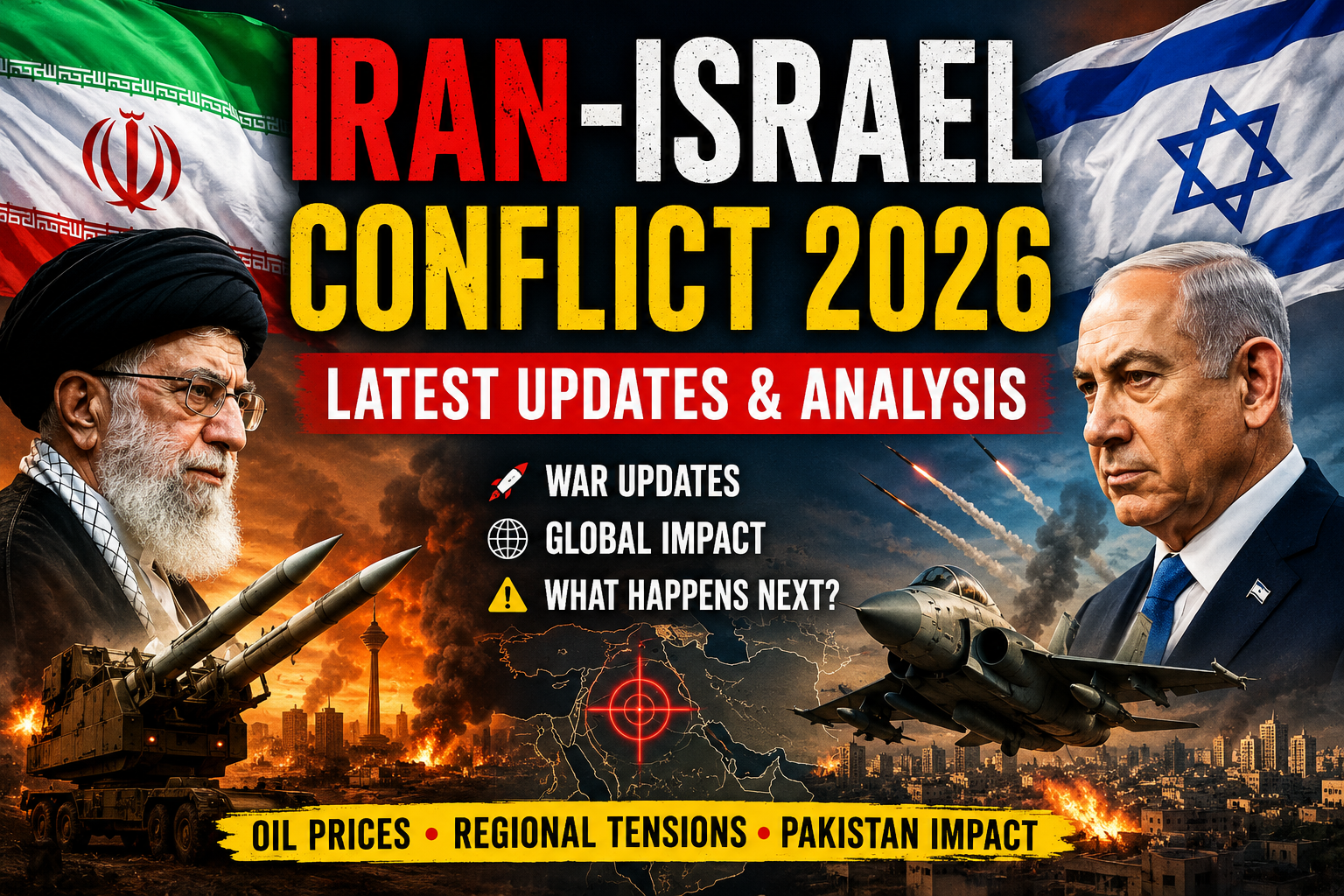
The Middle East is once again facing one of its most dangerous periods in recent history as tensions between Iran and Israel continue to rise. What started years ago as a political and strategic rivalry has now transformed into a major regional crisis involving missile attacks, proxy groups, cyber warfare, military operations, and international pressure from global powers like the United States, Russia, and China.
In 2026, the situation has become even more serious. Oil prices are increasing, global markets are reacting nervously, and countries across the Gulf region are strengthening security measures. The possibility of a wider regional war has become a real concern for governments, analysts, and ordinary citizens around the world.
Background of the Iran-Israel Conflict
The conflict between Iran and Israel is not new. Since the 1979 Islamic Revolution in Iran, relations between the two countries have remained hostile. Iran has consistently opposed Israeli policies in Palestine and has supported groups such as Hezbollah in Lebanon and other regional factions that oppose Israel. On the other hand, Israel considers Iran’s growing military influence and nuclear ambitions as a direct threat to its national security.
Over the years, both countries have engaged in indirect conflict through intelligence operations, cyberattacks, targeted assassinations, and support for rival groups in countries like Syria, Iraq, Lebanon, and Yemen. However, recent events have pushed the rivalry closer to direct military confrontation.
What Triggered the Latest Escalation?
The latest escalation began after a series of military strikes and retaliatory attacks in the region. Israel reportedly conducted operations targeting Iranian military infrastructure and allied groups in Syria and Iraq. Iran responded by launching missiles and drones toward Israeli positions and strategic targets.
The situation became more dangerous when tensions spread into important global trade routes, especially near the Strait of Hormuz. This waterway is one of the world’s most critical oil shipping routes. Any instability there immediately affects global oil markets and international trade.
Several international reports also highlighted attacks on ships, rising military activity in the Gulf, and increased naval deployments by regional and international forces. These developments created fears that the conflict could spread beyond Iran and Israel into a much larger regional war.
Role of the United States
The United States has played a central role in the crisis. America remains one of Israel’s strongest allies and has repeatedly stated that it supports Israel’s right to defend itself. At the same time, Washington has attempted diplomatic negotiations with Iran regarding its nuclear program and regional activities.
However, talks between the two sides have faced major obstacles. Iran has accused the United States of supporting Israeli aggression, while American officials continue to express concern over Iran’s missile capabilities and regional influence.
The presence of US military bases across the Middle East has also increased tensions. Any direct attack involving American assets could quickly turn the conflict into a broader international crisis.
Iran’s Military Strategy
Iran’s strategy relies heavily on asymmetric warfare. Instead of depending only on traditional military power, Iran uses drones, ballistic missiles, cyber capabilities, and allied regional groups to project influence.
Iran has invested significantly in drone technology in recent years. These drones are cheaper than advanced fighter jets but can still cause serious damage to military bases, infrastructure, and strategic targets. Iran has also developed long-range missile systems that can reach multiple areas across the Middle East.
In addition to military capabilities, Iran maintains strong relationships with regional groups in countries such as Lebanon, Iraq, Syria, and Yemen. These alliances give Tehran strategic depth and allow it to pressure opponents across several fronts simultaneously.
Israel’s Response and Defense Systems
Israel possesses one of the most advanced military systems in the world. Its air defense systems, including Iron Dome and other missile interception technologies, have played a critical role in defending against incoming rockets and drones.
Israel has also increased intelligence and cyber operations against Iranian networks and military activities. Israeli leadership believes that preventing Iran from becoming militarily stronger is essential for national security.
At the same time, Israeli authorities remain concerned about attacks from multiple directions. Hezbollah in Lebanon, armed groups in Syria and Iraq, and drone threats from different regions all create a highly complex security environment.
Global Economic Impact
One of the biggest global concerns surrounding the conflict is the impact on oil prices and international markets. The Middle East remains one of the world’s most important energy-producing regions. Any disruption to shipping routes or oil infrastructure can affect economies worldwide.
In recent weeks, oil prices have risen sharply due to fears of supply disruptions. Shipping companies are becoming more cautious, insurance costs for cargo vessels are increasing, and investors are reacting to the uncertainty.
Countries that rely heavily on imported fuel may experience inflation, higher transportation costs, and economic pressure. Developing nations are often the most affected when global oil prices increase suddenly.
Impact on Pakistan
For Pakistan, the Iran-Israel conflict carries several important implications. Pakistan shares a border with Iran and maintains diplomatic relations with both Iran and many Gulf countries.
An extended conflict could affect fuel prices inside Pakistan, increase economic pressure, and create regional security concerns. Rising oil prices directly impact transportation, electricity generation, and import expenses in Pakistan.
At the diplomatic level, Pakistan is expected to maintain a balanced approach while encouraging peace and stability in the region. Pakistani officials have repeatedly emphasized the importance of dialogue and avoiding further escalation.
There are also concerns that prolonged instability in the Middle East could affect overseas Pakistani workers in Gulf countries and reduce economic opportunities across the region.
Risk of a Wider Regional War
One of the most serious fears among international observers is that the conflict could spread into a broader regional war involving multiple countries and armed groups.
If military operations intensify further, neighboring countries may become directly or indirectly involved. Regional alliances, proxy groups, and strategic partnerships make the situation extremely sensitive.
A larger conflict could impact global trade, aviation routes, financial markets, and energy supplies. It could also increase humanitarian crises across already unstable regions.
International organizations and major powers continue to call for restraint, but achieving peace remains difficult due to deep political disagreements and long-standing distrust between the involved parties.
Role of Diplomacy
Despite rising tensions, diplomacy remains the only realistic path toward long-term stability. International mediators, including European countries, Gulf states, and global organizations, are attempting to reduce tensions through negotiations and backchannel discussions.
Many experts believe that direct war would be costly for all sides involved. For this reason, diplomatic efforts continue even during periods of military escalation.
However, successful diplomacy requires compromise, trust-building, and international cooperation — all of which remain difficult under current conditions.
Conclusion
The Iran-Israel conflict in 2026 represents one of the most dangerous geopolitical crises in the modern Middle East. Military tensions, economic uncertainty, and international involvement have created a highly unstable environment with global consequences.
Although the conflict has deep historical roots, the current escalation shows how quickly regional disputes can impact the entire world. Rising oil prices, shipping disruptions, security threats, and diplomatic tensions are already affecting international markets and political relations.
For countries like Pakistan and many others, the priority remains peace, stability, and avoiding a wider war that could damage regional and global economies alike.
The coming months will likely determine whether diplomacy can reduce tensions or whether the conflict moves toward a more dangerous phase. The world is watching closely, hoping that dialogue and restraint will prevail over further violence and destruction.
FAQs
What is the main reason behind the Iran-Israel conflict?
The main reason is political and strategic rivalry. Iran opposes Israeli policies in the Middle East, while Israel considers Iran’s military growth and nuclear ambitions a major security threat.
Why has the conflict become more serious in 2026?
The conflict escalated after military strikes, missile attacks, drone operations, and rising tensions near important oil shipping routes like the Strait of Hormuz.
How does the Iran-Israel conflict affect oil prices?
The Middle East is a major oil-producing region. Any war or instability in the area creates fear of supply disruption, causing global oil prices to rise.
What role does the United States play in this conflict?
The United States strongly supports Israel and also maintains military presence in the Middle East. At the same time, it has attempted diplomatic negotiations with Iran regarding regional security and nuclear issues.
Can this conflict turn into a larger regional war?
Yes, many analysts believe there is a risk of a wider regional conflict because multiple countries and armed groups are indirectly connected to the situation.
How could the conflict impact Pakistan?
Pakistan may face higher fuel prices, economic pressure, and regional security concerns due to its geographic location and dependence on imported energy resources.
What is the Strait of Hormuz and why is it important?
The Strait of Hormuz is one of the world’s most important oil shipping routes. A large percentage of global oil trade passes through this narrow waterway.
What military technologies are being used in the conflict?
The conflict involves drones, ballistic missiles, air defense systems, cyber warfare, and intelligence operations.
Is diplomacy still possible between Iran and Israel?
Although tensions remain high, international organizations and several countries continue diplomatic efforts to prevent a wider war and reduce regional instability.
How is the global economy reacting to the crisis?
Global markets are reacting cautiously. Oil prices, shipping costs, and investor uncertainty have increased because of fears that the conflict could expand further.
[…] current situation between Iran and the United States is highly tense, with nuclear concerns, sanctions, and political pressure all […]