
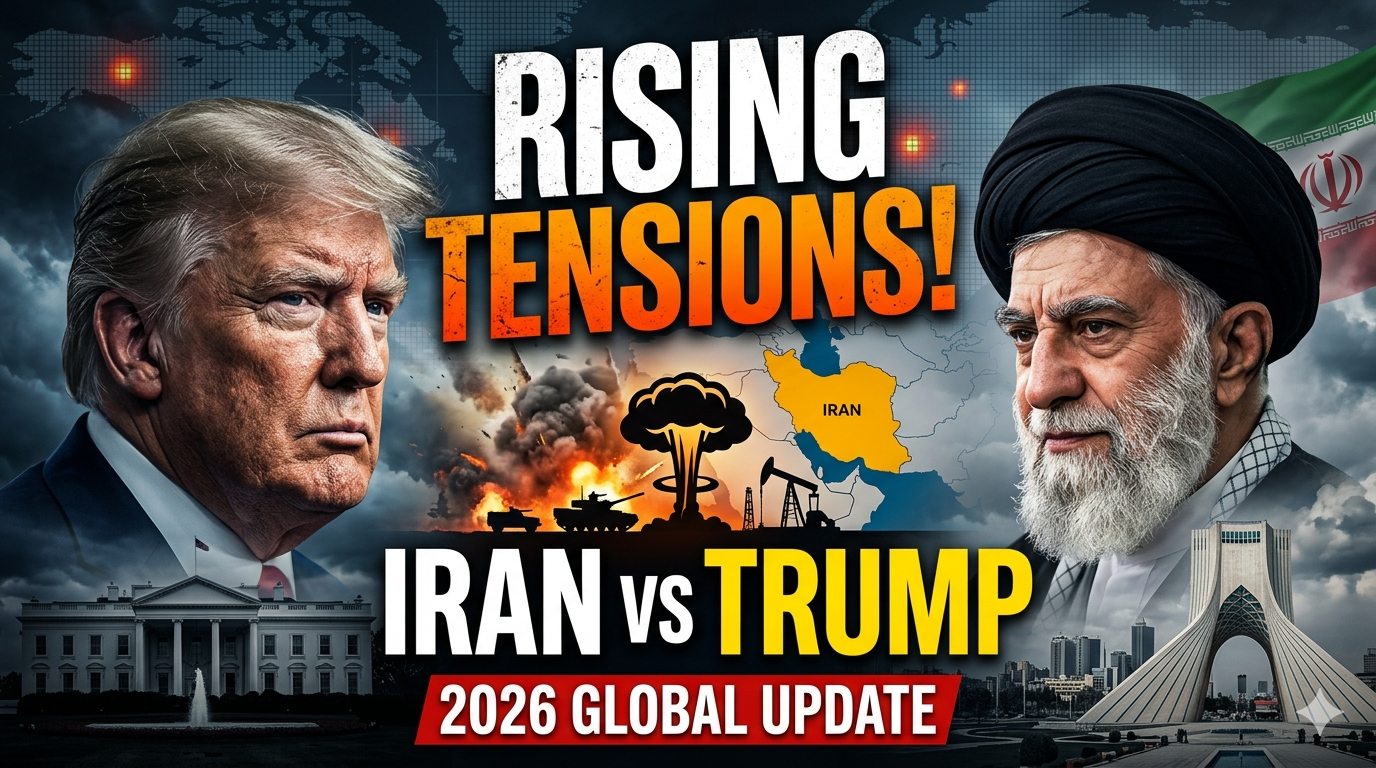
In 2026, global politics is once again heavily focused on the Middle East as tensions between the United States and Iran continue to rise. Recent strong statements from Donald Trump have added new pressure to an already fragile situation involving nuclear negotiations, sanctions, and regional security concerns.
This article explains the current situation in simple terms, what is driving the conflict, and what could happen next.
Why Iran and the US are in conflict
The tension between Iran and the United States is not new. For decades, both countries have had disagreements over nuclear development, regional influence, and sanctions.
The central issue remains Iran’s nuclear program. The United States and its allies fear that Iran may be moving closer to developing nuclear weapons capability. Iran, however, insists that its program is strictly for peaceful purposes such as energy production and medical research.
Donald Trump has recently issued strong warnings suggesting that if a new nuclear agreement is not reached, the United States may consider further military action. These comments have increased international concern and speculation about possible escalation.
The nuclear deal dispute
One of the most important issues is the collapse of the earlier nuclear agreement. The 2015 nuclear deal was designed to limit Iran’s nuclear activities in exchange for lifting sanctions. However, after the United States withdrew from the agreement, the situation became more complicated.
Today, the US position includes demands such as:
- Strict limits on uranium enrichment
- Full access for international inspectors
- Restrictions on missile development
Iran rejects these demands, arguing that they violate its sovereignty and right to self-defense and peaceful nuclear development.
Economic sanctions and pressure
The United States has imposed new sanctions targeting Iran’s oil exports, banking system, and shipping networks. These sanctions are designed to weaken Iran’s economy and force it back into negotiations.
However, Iran claims that sanctions only increase resistance rather than compliance. Over time, sanctions have contributed to inflation, currency instability, and economic hardship inside the country.
Despite this pressure, Iran continues to maintain its political stance and nuclear program.
Military tension and regional instability
Recent developments suggest increasing indirect confrontations in the Middle East involving US forces and groups aligned with Iran. While no full-scale war has begun, minor clashes and proxy conflicts have raised concerns.
After Trump’s recent statements, analysts fear that any miscalculation could quickly escalate tensions into a larger conflict. At the same time, diplomatic channels remain active, with several countries reportedly working behind the scenes to prevent escalation.
Iran’s response
Iran has strongly rejected US warnings and sanctions. Officials in Tehran have stated that:
- Iran will defend its sovereignty at all costs
- Its nuclear program is a national right
- External pressure will not force policy changes
Hardline political voices within Iran have also responded aggressively, further increasing tension in the region.
Global reaction
The international community is closely monitoring the situation. Countries in Europe, as well as powers like China and Russia, are encouraging diplomatic solutions and urging restraint from both sides.
Most analysts believe that while an all-out war is unlikely, the risk of accidental escalation remains real. Global oil markets are also sensitive to these developments, as the Middle East plays a critical role in global energy supply.
Conclusion
The current situation between Iran and the United States is highly tense, with nuclear concerns, sanctions, and political pressure all contributing to instability. Strong statements from Donald Trump and firm responses from Iran have made diplomacy more difficult but still necessary.
The coming weeks will be crucial in determining whether diplomacy prevails or whether tensions continue to escalate further. For now, the world watches closely as events unfold.
Why are Iran and the United States in conflict?
The main reasons include Iran’s nuclear program, economic sanctions, and long-standing political disagreements. The US fears Iran could develop nuclear weapons, while Iran says its program is for peaceful purposes.
What did Donald Trump recently say about Iran?
Donald Trump warned that if a new nuclear agreement is not reached, the United States may consider stronger actions, including military options. His statements have increased global concern.
Is Iran really developing nuclear weapons?
Iran says its nuclear program is peaceful and for energy purposes. However, the US and some allies believe Iran is getting closer to weapons capability, which remains a major point of dispute.
What are US sanctions on Iran?
The United States has placed restrictions on Iran’s oil exports, banking system, and shipping industry. These sanctions are designed to pressure Iran economically to agree to nuclear negotiations.
Can this conflict turn into a war?
Experts believe a full-scale war is unlikely, but the risk of escalation still exists due to military tensions and regional proxy conflicts. Misunderstandings or sudden incidents could increase risks.