
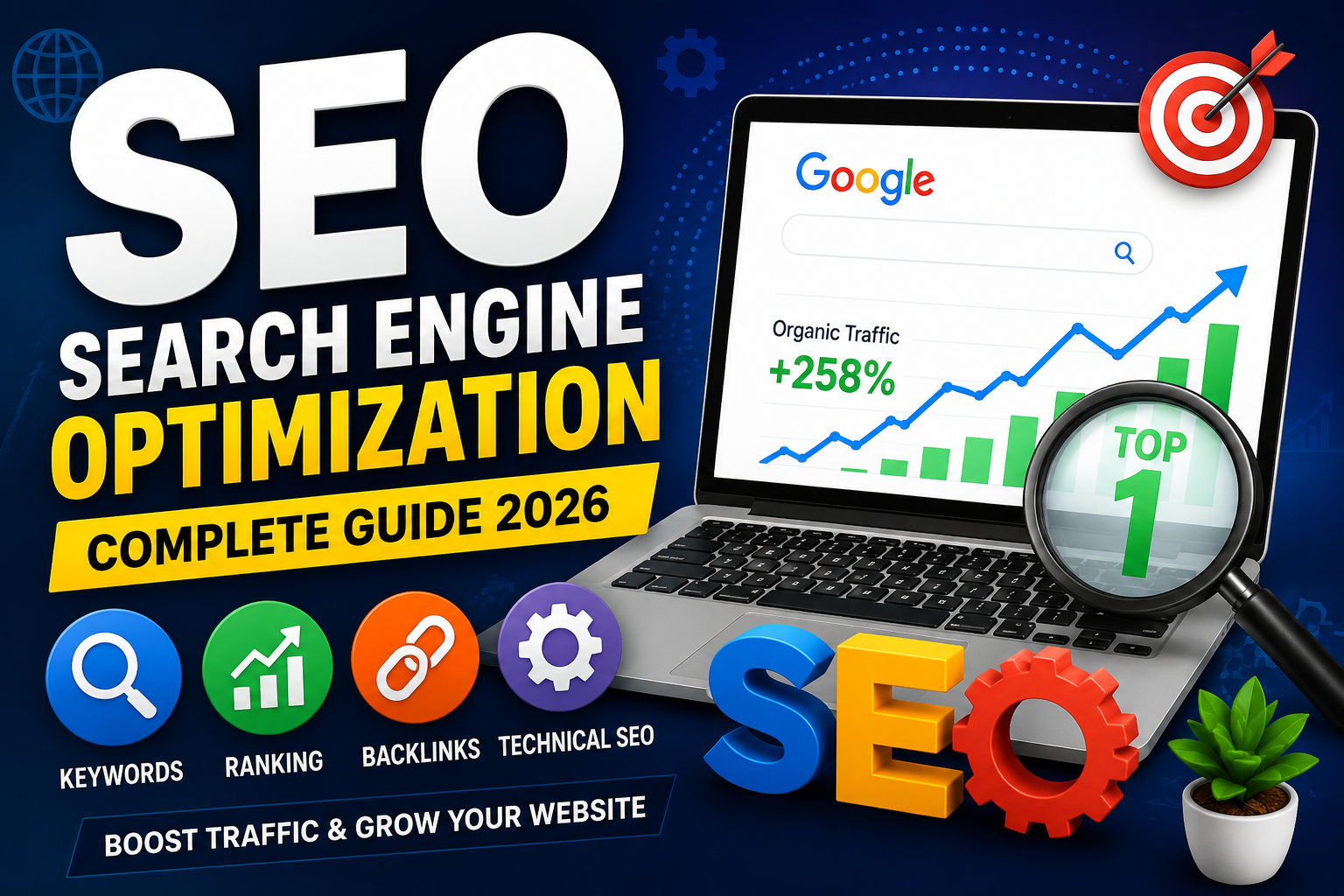
SEO, short for Search Engine Optimization, is the process of improving a website so it can rank higher on search engines like Google. When your website appears on the first page of search results, you get more visibility, traffic, and potential customers without paying for ads.
In today’s digital world, SEO is not optional anymore—it is a core part of online success. Whether you run a blog, an e-commerce store, or a service-based business, SEO helps you reach the right audience at the right time.
What is SEO?
SEO is a set of techniques used to improve a website’s ranking in organic (non-paid) search results. When users search for something like “best web design services” or “buy IT hardware,” search engines show them the most relevant and trustworthy pages.
SEO focuses on understanding how search engines work, what people search for, and how to optimize content accordingly.
Why SEO is Important
SEO is important because it helps websites grow sustainably. Instead of paying for every click like in ads, SEO brings free and consistent traffic.
Here are some key benefits:
- Increases website visibility
- Drives organic (free) traffic
- Builds brand trust and authority
- Improves user experience
- Generates long-term results
When done correctly, SEO becomes a long-term digital asset for your business.
How Search Engines Work
Search engines like Google use automated bots (called crawlers) to scan websites. They collect data and store it in an index. When a user searches something, the search engine quickly analyzes this index and shows the most relevant results.
The ranking is based on many factors such as:
- Content quality
- Website speed
- Mobile friendliness
- Backlinks
- User experience
To manage website performance in search results, tools like Google Search Console are commonly used.
Main Types of SEO
SEO is generally divided into three main categories:
1. On-Page SEO
On-page SEO refers to everything you do on your website to improve rankings. This includes:
- Keyword optimization
- High-quality content
- Proper headings (H1, H2, H3)
- Internal linking
- Image optimization
Good on-page SEO helps search engines understand your content better.
2. Off-Page SEO
Off-page SEO involves activities outside your website that improve authority and trust. The most important factor is backlinks—links from other websites pointing to yours.
Other off-page strategies include:
- Social media marketing
- Guest posting
- Influencer outreach
- Brand mentions
The more quality backlinks you have, the more trustworthy your website appears.
3. Technical SEO
Technical SEO focuses on the backend structure of your website. It ensures search engines can crawl and index your site easily.
Key elements include:
- Fast loading speed
- Mobile responsiveness
- Secure website (HTTPS)
- XML sitemap
- Fixing broken links
Without technical SEO, even great content may not rank well.
Importance of Keywords in SEO
Keywords are the foundation of SEO. A keyword is the word or phrase people type into search engines.
For example:
- “SEO services”
- “best digital marketing agency”
- “how to rank website on Google”
If you use the right keywords in your content, search engines understand what your page is about and show it to relevant users.
However, keyword stuffing (using too many keywords unnaturally) can harm your ranking. The key is to use keywords naturally in content, titles, and headings.
Content is the King
In SEO, content plays the most important role. Search engines always prioritize helpful, informative, and original content.
Good SEO content should be:
- Easy to read
- Informative and valuable
- Well-structured
- Updated regularly
If your content solves user problems, it will naturally rank higher over time.
Mobile and User Experience
Today, most users browse websites on mobile devices. That’s why search engines prioritize mobile-friendly websites.
A good website should:
- Load fast on mobile
- Be easy to navigate
- Have readable text
- Avoid cluttered design
User experience directly affects SEO rankings.
SEO is a Long-Term Strategy
One of the biggest misconceptions about SEO is that it gives instant results. In reality, SEO takes time. Depending on competition, it can take weeks or months to see significant results.
But once your website starts ranking, the traffic is stable and long-lasting.
Conclusion
SEO is a powerful digital marketing strategy that helps websites grow organically. By optimizing your content, improving technical performance, and building authority, you can achieve higher rankings on search engines like Google.
Tools like Google Search Console help you track performance and improve your strategy over time.
In short, SEO is not just about ranking—it’s about building trust, improving visibility, and creating long-term success in the digital world.
What is SEO in simple words?
SEO (Search Engine Optimization) is the process of improving a website so it appears higher on search engines like Google. It helps websites get more organic (free) traffic.
How long does SEO take to show results?
SEO is a long-term strategy. Usually, it takes 3 to 6 months to see noticeable improvements, depending on competition, content quality, and website authority.
Is SEO better than paid ads?
SEO and paid ads both have benefits. Paid ads give instant traffic, while SEO provides long-term, free, and consistent traffic. Most businesses use both together for best results.