

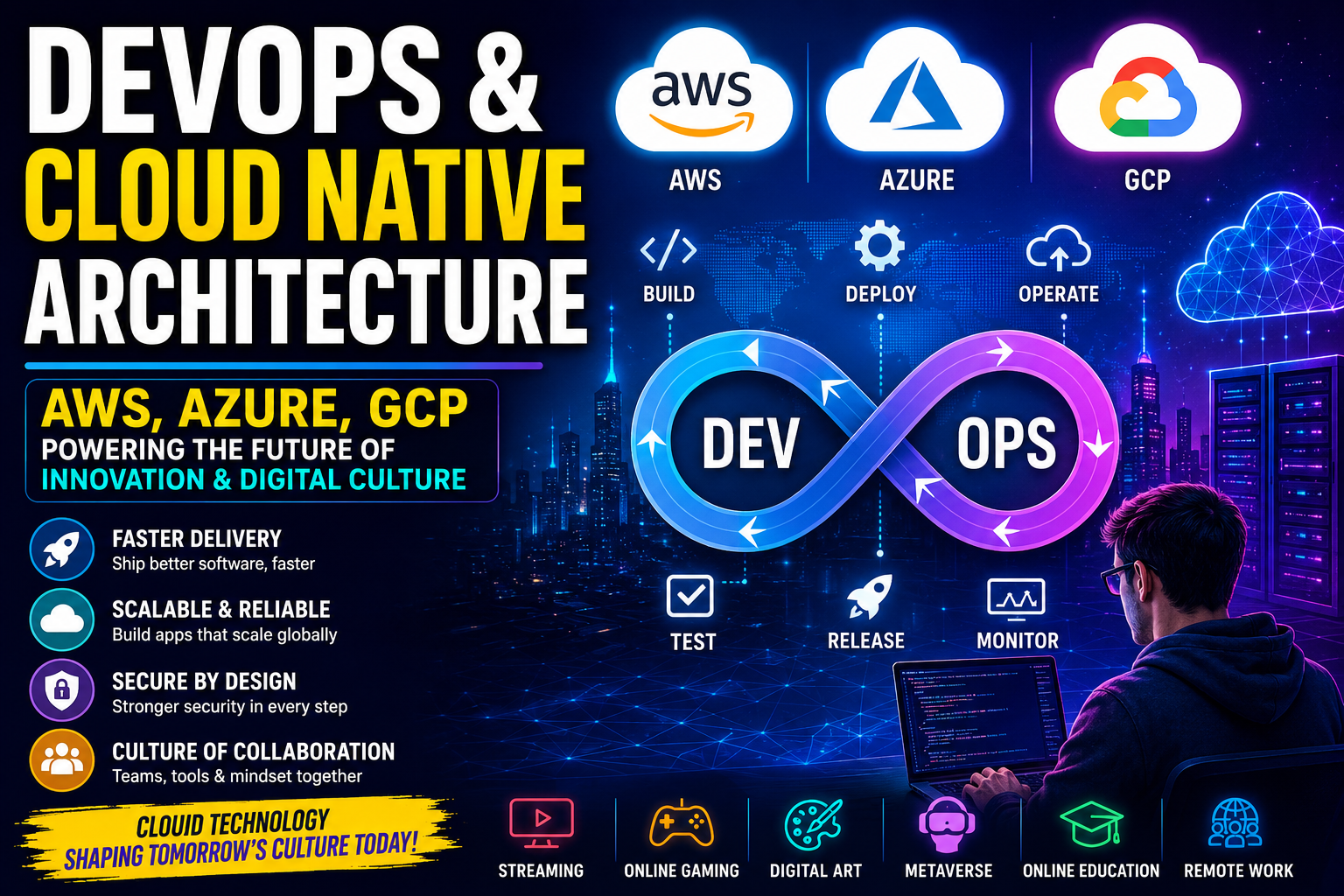
Technology is no longer just about machines, software, or coding. In today’s world, technology has become part of modern culture. The way businesses work, artists create, and people connect globally is deeply influenced by digital systems running behind the scenes. One of the biggest forces driving this transformation is DevOps and Cloud Native Architecture.
Platforms like Amazon Web Services, Microsoft Azure, and Google Cloud Platform are not only changing the tech industry but are also shaping digital creativity, communication, entertainment, and online experiences across the world.
From streaming platforms and gaming servers to digital art galleries and AI-powered applications, cloud-native systems have become the invisible backbone of modern digital culture.
Understanding DevOps in Simple Words
DevOps is a modern approach that combines software development and IT operations to create applications faster, safer, and more efficiently. In traditional systems, developers and operations teams worked separately, often causing delays and communication problems.
DevOps changed that culture completely.
It introduced collaboration, automation, continuous updates, and faster delivery processes. Instead of waiting weeks or months for software updates, companies can now release improvements daily or even hourly.
This shift is not only technical — it represents a cultural transformation inside organizations. Teams now focus on collaboration, creativity, speed, and innovation.
What Is Cloud Native Architecture?
Cloud Native Architecture refers to building applications specifically for cloud environments instead of traditional physical servers. These applications are designed to scale quickly, recover automatically, and handle millions of users worldwide.
Cloud-native systems usually use:
- Containers
- Microservices
- Kubernetes
- Serverless computing
- Automated deployment pipelines
These technologies help businesses build flexible and reliable digital experiences.
For example, when millions of people stream movies, play online games, attend virtual concerts, or use social media simultaneously, cloud-native infrastructure makes it possible.
Role of AWS, Azure, and GCP
Today, three major cloud providers dominate the industry:
Amazon Web Services
AWS is considered one of the most powerful cloud platforms globally. It offers services for storage, AI, machine learning, cybersecurity, databases, and scalable applications. Many startups and global companies rely on AWS for reliability and performance.
Microsoft Azure
Azure is widely used by enterprises and organizations already connected with Microsoft technologies. It provides strong hybrid cloud solutions and enterprise-level security.
Google Cloud Platform
Google Cloud is famous for its AI, data analytics, and high-performance infrastructure. Many companies choose GCP for modern application development and machine learning solutions.
Together, these platforms power much of the internet economy and digital creativity we experience daily.
How Cloud Technology Influences Modern Culture
When people hear the word “cloud,” they usually think about storage or servers. But cloud computing has become much more than that.
It now influences:
- Music streaming
- Digital filmmaking
- Online gaming
- Virtual reality
- Social media platforms
- AI-generated art
- Remote work culture
- Online education
Without cloud-native systems, modern digital culture would struggle to exist at its current scale.
Artists can now collaborate globally in real time. Creators upload content instantly. Businesses launch platforms for millions of users within days instead of years.
Technology has become a cultural enabler.
DevOps as a Creative Mindset
DevOps is often viewed only as a technical practice, but in reality, it represents a mindset built around continuous improvement and collaboration.
This philosophy is very similar to artistic culture.
Artists constantly refine their work. Musicians improve performances. Designers iterate on ideas. DevOps follows the same principle by continuously improving software and digital experiences.
In many ways, DevOps introduced creativity into technical operations. Teams experiment, innovate, automate, and solve problems faster than ever before.
This has created a workplace culture focused on agility and innovation rather than rigid corporate structures.
Cloud Native Systems and the Future of Digital Art
The rise of AI art, virtual exhibitions, metaverse experiences, and digital design platforms depends heavily on cloud-native architecture.
Modern digital artists now use:
- AI rendering systems
- Cloud-based editing tools
- Online collaboration platforms
- Real-time 3D rendering engines
- Massive cloud storage solutions
Without scalable cloud infrastructure, many modern creative industries would face limitations in speed, accessibility, and performance.
Even global live-streaming events and virtual concerts rely on cloud platforms to handle massive audiences.
Why Businesses Are Moving to Cloud-Native Infrastructure
Companies today face intense competition in the digital world. Users expect fast, secure, and uninterrupted online experiences.
Cloud-native systems help businesses:
- Scale applications instantly
- Reduce downtime
- Improve cybersecurity
- Launch features faster
- Lower infrastructure costs
- Support global audiences
This flexibility gives businesses the power to innovate rapidly and adapt to changing market trends.
Startups especially benefit because they no longer need expensive physical servers to build world-class applications.
The Human Side of Technology
One important aspect often ignored in cloud discussions is the human impact.
Remote work culture became possible largely because of cloud technologies. Teams now collaborate across countries using cloud-powered applications and communication platforms.
Developers, designers, creators, and entrepreneurs can work from anywhere in the world.
This has changed global work culture permanently.
Technology is no longer limited by geography. Creativity and innovation now happen in connected digital ecosystems powered by cloud-native architecture.
Challenges of Cloud and DevOps
Despite the advantages, cloud transformation also comes with challenges:
- Cybersecurity threats
- Data privacy concerns
- Complexity in multi-cloud environments
- High learning curves
- Infrastructure management costs
Organizations must continuously train teams and improve security practices to handle these modern challenges effectively.
However, the long-term benefits continue to outweigh the risks for most businesses.
Final Thoughts
DevOps and Cloud Native Architecture are more than technical trends — they are shaping the future of digital culture, creativity, and global innovation.
Platforms like AWS, Azure, and GCP have transformed how people build applications, share ideas, create art, and experience entertainment online.
As technology continues evolving, cloud-native systems will become even more deeply connected with everyday life. From AI-driven creativity to global digital collaboration, the future of innovation will depend heavily on scalable cloud infrastructure and DevOps culture.
In a world driven by digital experiences, DevOps is no longer just about operations — it has become part of the creative and cultural foundation of modern society.
What is DevOps?
DevOps is a modern software development approach that combines development and IT operations to improve collaboration, automation, and faster delivery of applications.
What is Cloud Native Architecture?
Cloud Native Architecture is a method of building applications specifically for cloud platforms using technologies like containers, microservices, and Kubernetes.
Why is DevOps important in modern technology?
DevOps helps companies release software faster, improve security, reduce downtime, and create better user experiences through automation and teamwork.
Which cloud platforms are most popular today?
The most popular cloud platforms are:
- Amazon Web Services
- Microsoft Azure
- Google Cloud Platform
How does cloud computing influence digital culture?
Cloud computing powers streaming services, social media, online gaming, digital art platforms, remote work systems, and AI-based creative tools used worldwide.
What are microservices in cloud-native systems?
Microservices are small independent components of an application that work together, making systems faster, scalable, and easier to manage.
Why are businesses moving to cloud-native infrastructure?
Businesses move to cloud-native systems because they offer better scalability, flexibility, faster deployment, lower costs, and improved reliability.
Is DevOps only for large companies?
No. Startups, small businesses, and freelancers also use DevOps practices to improve workflow efficiency and application performance.