

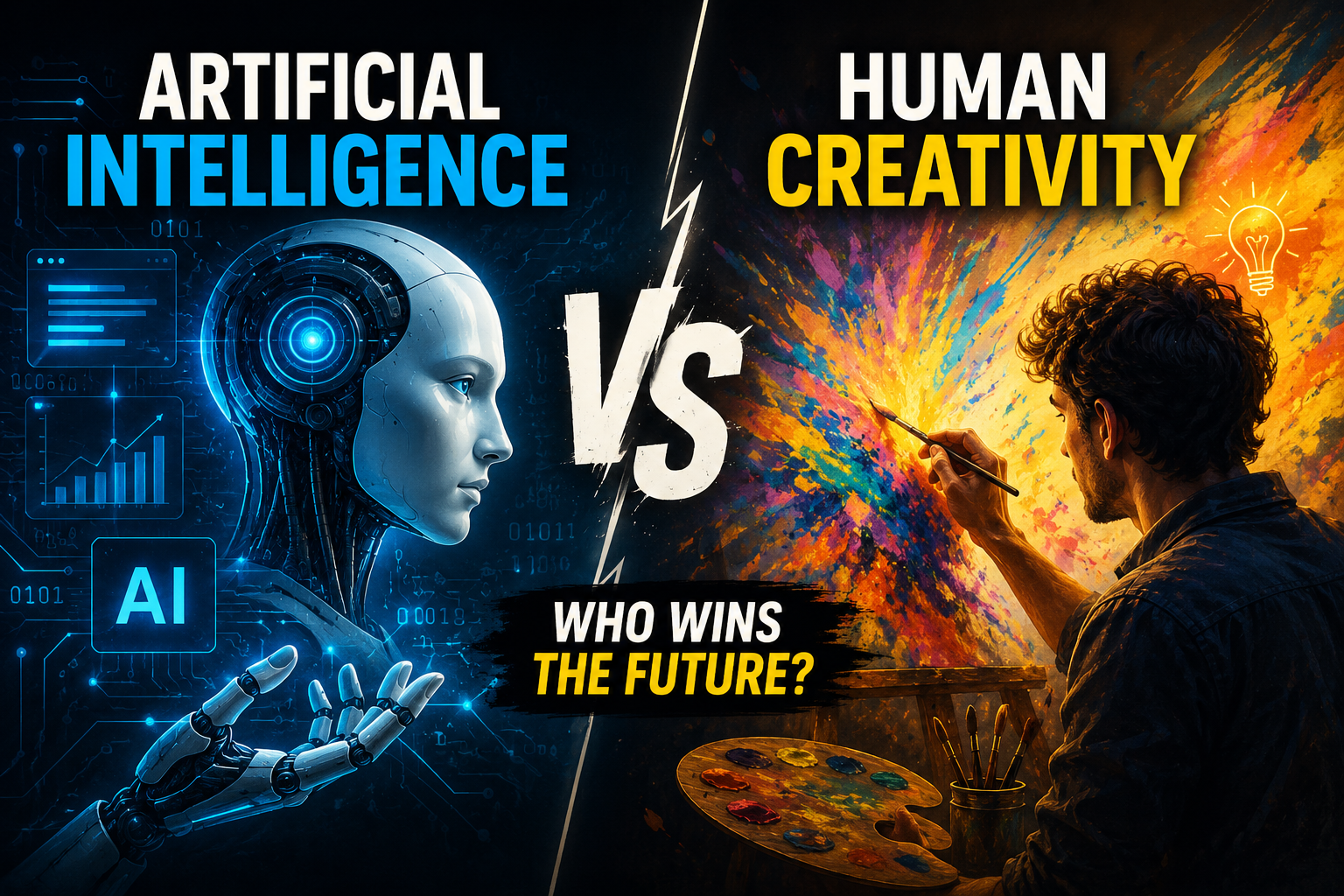
The debate between Artificial Intelligence and human creativity has become increasingly important in the modern digital world. Artificial intelligence is now capable of writing content, creating artwork, composing music, and generating designs within seconds. These developments have changed the way businesses and individuals work, especially in creative industries. However, many people still question whether AI can truly replace the imagination, emotions, and originality of humans. While AI offers speed and efficiency, human creativity remains deeply connected to personal experiences, emotions, and innovative thinking.
What is Artificial Intelligence?
Artificial intelligence refers to computer systems designed to perform tasks that usually require human intelligence. AI technologies use machine learning and data analysis to recognize patterns, solve problems, and generate results. Today, AI is used in content writing, graphic design, marketing, video production, and many other industries. Businesses rely on AI tools to improve productivity, automate repetitive tasks, and save time. The ability of AI to process large amounts of information quickly makes it highly effective for modern digital operations.
Understanding Human Creativity
Human creativity is the ability to produce original ideas using imagination, emotions, and experiences. Unlike AI, humans create based on feelings, memories, culture, and personal understanding of the world. Creativity allows people to write emotional stories, paint meaningful artwork, and develop innovative ideas that can inspire society. Human creativity often comes from passion, curiosity, and life experiences, making it unique and difficult for machines to fully replicate.
Difference Between AI and Human Creativity
One major difference between AI and human creativity is the source of ideas. AI generates content by analyzing existing data and patterns, while humans create ideas from imagination and emotional experiences. AI can imitate artistic styles or writing formats, but it cannot genuinely feel emotions such as happiness, sadness, or empathy. Humans use emotional intelligence to connect with audiences on a deeper level. This emotional connection is what makes human-created music, literature, and art powerful and memorable.
Advantages of Artificial Intelligence
Artificial intelligence provides several advantages in creative industries. One of its biggest strengths is speed. AI can generate articles, edit videos, and create graphics much faster than humans. This efficiency helps businesses save time and improve workflow. AI also supports data-driven creativity by analyzing trends and customer behavior. Marketers use AI tools to create targeted campaigns and personalized content for audiences. In addition, AI helps creators brainstorm ideas and automate repetitive tasks, allowing them to focus on more strategic and creative work.
Limitations of Artificial Intelligence
Despite its capabilities, AI still has significant limitations. AI lacks true imagination and emotional understanding because it depends entirely on data and algorithms. It cannot think independently or create ideas beyond the information it has learned from. AI-generated content may appear creative, but it often lacks emotional depth and originality. There are also ethical concerns related to AI, including copyright issues, misinformation, and the potential replacement of jobs in creative industries. These challenges show that AI still cannot fully replace human creativity.
Why Human Creativity Remains Important
Human creativity continues to play an essential role in innovation and communication. Creative professionals use emotions, intuition, and critical thinking to produce meaningful work that resonates with people. Many of the world’s greatest inventions, artistic masterpieces, and cultural movements were created through human imagination. Humans can challenge traditional thinking, explore abstract ideas, and express emotions in ways machines cannot understand. This ability to create with purpose and emotional depth is what keeps human creativity valuable in the age of AI.
AI and Humans Working Together
Instead of replacing human creativity, AI is more likely to become a supportive tool for creators. Many writers, designers, and marketers already use AI to improve efficiency and productivity. AI can assist with research, editing, data analysis, and idea generation, while humans focus on emotional storytelling and innovation. This collaboration between humans and technology can lead to new creative opportunities and more advanced forms of digital content creation.
Future of Creativity
Future of creativity will likely involve a combination of artificial intelligence and human imagination. AI technology will continue to evolve and become more advanced in areas such as design, filmmaking, music production, and content marketing. However, human creativity will remain important because people value emotional connection, originality, and cultural understanding. Businesses and individuals who successfully combine AI efficiency with human creativity will have a stronger advantage in the digital world.
Conclusion
Comparison between artificial intelligence and human creativity is not about determining which one is better. AI offers speed, automation, and data-driven solutions, while human creativity provides emotion, imagination, and originality. Although AI can assist in creative processes, it still cannot fully replace the emotional depth and innovative thinking of humans. The future will likely depend on collaboration between AI tools and human creators, where technology enhances productivity while humans continue to bring meaning and emotional value to creative work.
Can Artificial Intelligence replace human creativity?
Artificial Intelligence can assist with creative tasks, but it cannot fully replace human creativity because humans use emotions, imagination, and personal experiences to create original ideas.
How does AI help creative industries?
AI helps creative industries by automating repetitive tasks, generating content ideas, improving productivity, and supporting design, marketing, music, and video production processes.
Why is human creativity still important?
Human creativity remains important because it provides emotional depth, originality, cultural understanding, and innovative thinking that AI cannot fully replicate.