

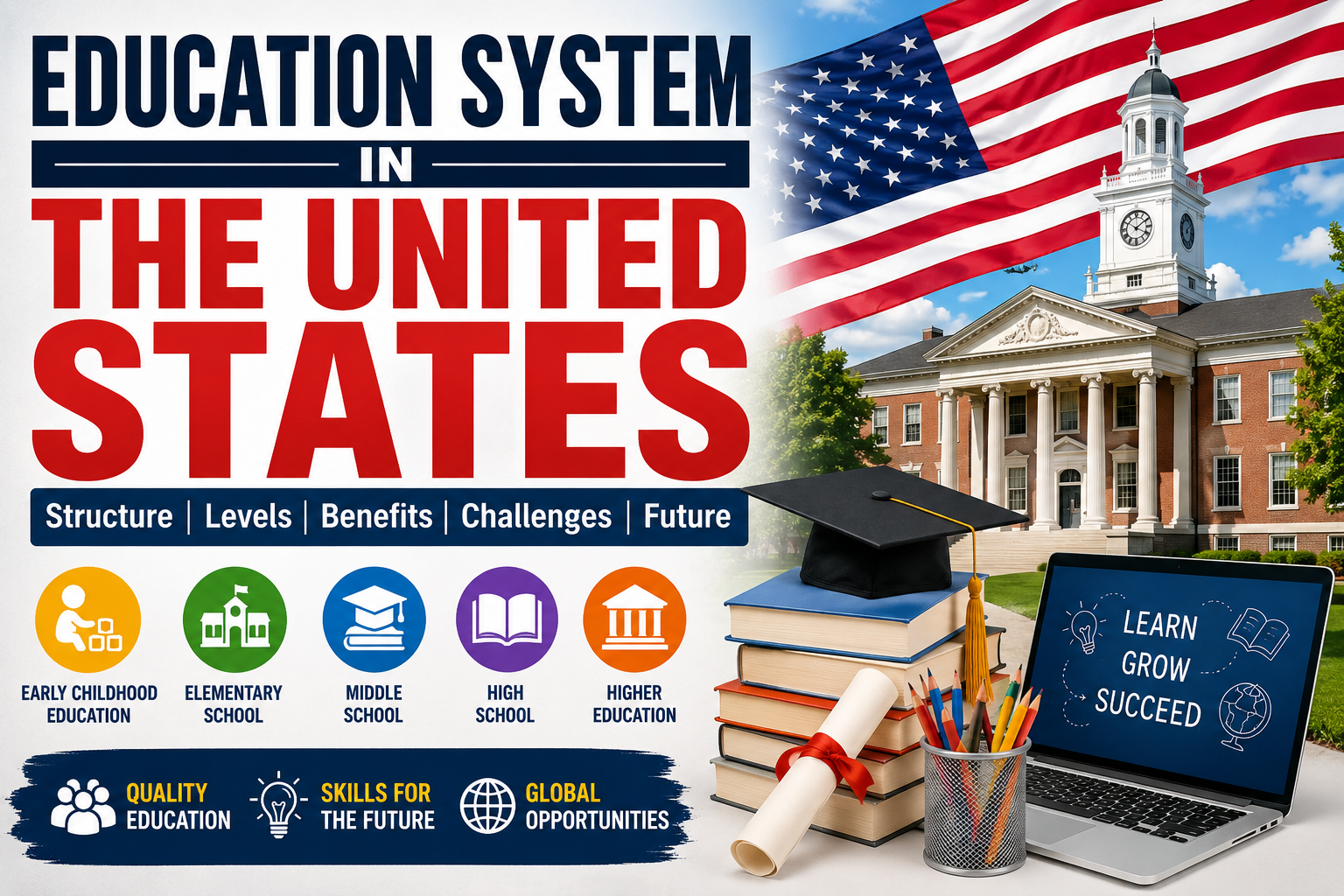
Education system in the United States is one of the most developed and influential systems in the world. It is designed to provide students with academic knowledge, practical skills, and personal development opportunities that prepare them for future careers and responsibilities. The American education system focuses on creativity, critical thinking, problem-solving, and innovation. It serves millions of students from diverse cultural and social backgrounds, making education an important foundation of society in the United States.
Early Childhood Education
The education structure in the United States begins with early childhood education. Most children start their learning journey in preschool programs before entering elementary school. Preschool education is optional and focuses on developing communication abilities, social skills, and basic learning concepts. These early educational experiences help children build a strong foundation for future academic success.
Elementary Education
Elementary school is the first official stage of formal education and generally starts when children are five or six years old. Students study important subjects such as mathematics, science, English language arts, and social studies. Schools also include art, music, and physical education to support creativity and physical development. Teachers help students build literacy, problem-solving skills, and positive learning habits.
Middle School Education
After elementary school, students continue to middle school or junior high school. This educational stage usually includes grades six through eight. Students experience more advanced academic content and greater independence in learning. Different teachers often teach different subjects, allowing students to gain specialized knowledge. Schools also encourage participation in clubs, sports, and social activities.
High School Education
High school represents the final stage of primary and secondary education in the United States. Students usually attend grades nine through twelve. High school students complete required subjects while choosing elective courses based on personal interests and career goals. Common subjects include mathematics, biology, chemistry, history, economics, literature, and foreign languages.
Students may also participate in advanced placement programs, vocational training, and college preparation courses. High school education prepares students for university studies, careers, and adult responsibilities.
Importance of Extracurricular Activities
One important feature of American education is extracurricular involvement. Schools encourage students to participate in sports teams, debate clubs, music programs, theater activities, and volunteer work. These experiences help students build leadership qualities, teamwork skills, discipline, and confidence.
Extracurricular activities also strengthen college applications and contribute to personal development beyond academic performance.
Public and Private Schools
The United States offers different educational options, including public schools, private schools, charter schools, and homeschooling.
Public schools receive funding from government sources and provide free education to students. Private schools operate through tuition payments and private funding. Some private institutions offer specialized educational programs or religious instruction.
Charter schools provide additional educational choices while receiving public funding. Homeschooling allows families to educate children independently according to customized educational approaches.
Higher Education System
Higher education is a major strength of the American education system. Universities and colleges in the United States attract students from around the world because of academic excellence and research opportunities.
Students can pursue associate degrees, bachelor’s degrees, master’s degrees, and doctoral programs. Community colleges offer affordable educational pathways and allow students to transfer into four-year universities.
American universities provide education across fields such as engineering, medicine, business, technology, law, and the arts.
Technology in Education
Technology has transformed education throughout the United States. Schools use online learning systems, digital resources, educational software, and virtual classrooms to improve learning experiences.
Students gain valuable technological skills that prepare them for modern careers. Online education has also expanded access to learning opportunities for people of different ages and backgrounds.
Role of Teachers
Teachers play an essential role in educational success. Educators guide students academically while encouraging creativity, curiosity, and independent thinking.
Teachers receive professional training and ongoing development opportunities to improve instructional methods. Strong teaching practices help students achieve academic success and lifelong learning habits.
Challenges in the Education System
Despite many strengths, the United States education system faces challenges. Educational inequality remains a concern because schools in different communities may have unequal resources and opportunities.
College tuition costs and student loan debt also create financial difficulties for many students and families. Educational leaders continue working to improve accessibility, fairness, and learning outcomes.
Future of Education
The future of education in the United States continues evolving through innovation and technological advancement. Schools increasingly emphasize critical thinking, communication, adaptability, and problem-solving abilities.
Modern education systems aim to prepare students not only for careers but also for responsible citizenship and lifelong learning.
Conclusion
The education system in the United States provides students with opportunities for academic growth, personal development, and career preparation. From preschool to higher education, American schools focus on building knowledge, skills, and creativity.
Although challenges remain, continuous improvements and educational innovation help strengthen learning opportunities for future generations. Education remains one of the most important foundations for individual success and national progress.
How is the education system structured in the United States?
The education system in the United States is generally divided into early childhood education, elementary school, middle school, high school, and higher education. Students usually complete kindergarten through grade 12 before attending college or university.
Is education free in the United States?
Public education is free for students from kindergarten through high school. Public schools are funded by local, state, and federal governments. However, private schools and universities often require tuition fees.
What subjects do students study in American schools?
Students commonly study mathematics, science, English, social studies, history, physical education, art, and technology. High school students may also choose elective subjects based on their interests.
What is higher education in the United States?
Higher education includes community colleges, colleges, and universities where students can earn associate, bachelor’s, master’s, and doctoral degrees.
Why is technology important in American education?
Technology improves learning experiences by providing online resources, digital classrooms, educational software, and flexible learning opportunities for students.