
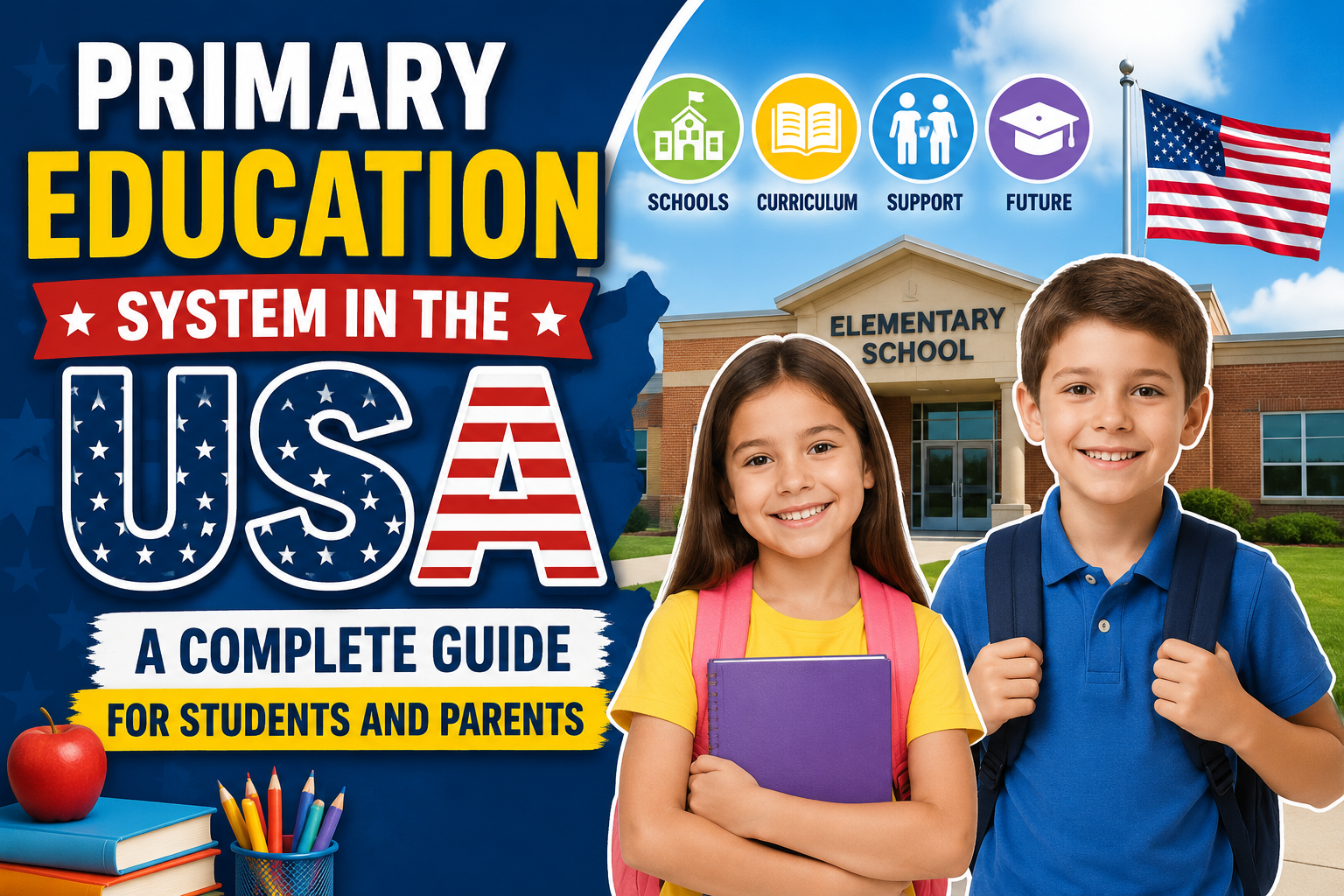
The primary education system in the United States is one of the most structured and widely recognized educational systems in the world. It is designed to provide children with essential academic knowledge, social skills, and personal development during their early years of learning. Primary education in the USA plays a major role in preparing students for secondary school and future academic success.
Parents, international students, and education researchers often search for information about how the American school system works. Understanding the structure, curriculum, grading methods, and classroom environment can help families make better educational decisions.
In this guide, we will explain everything about the primary education system in the USA, including grade levels, subjects, school types, teaching methods, and the benefits of studying in American elementary schools.
What Is Primary Education in the USA?
Primary education in the United States refers to the first stage of formal education that children receive after preschool or kindergarten. It is commonly known as elementary school education. This stage focuses on building foundational skills in reading, writing, mathematics, science, and social development.
In most states, primary education starts at the age of five or six and continues until the age of eleven or twelve. The system is managed by local school districts, while each state sets its own educational standards and policies.
The American education system emphasizes creativity, communication, teamwork, and problem-solving skills from an early age.
Structure of the Primary Education System in the USA
The structure of elementary education in the USA may vary slightly from state to state, but the general format remains similar across the country.
Kindergarten
Kindergarten is usually the first year of formal schooling in America. Children typically enter kindergarten at the age of five. At this level, students learn basic reading, counting, writing, shapes, colors, and social interaction skills.
Kindergarten also helps children adapt to classroom routines and develop communication abilities.
Elementary School Grades
Primary education generally includes the following grades:
- Kindergarten (K)
- Grade 1
- Grade 2
- Grade 3
- Grade 4
- Grade 5
Some schools also include Grade 6 as part of elementary school education.
Students progress through these grade levels each year based on academic performance and attendance.
Subjects Taught in American Primary Schools
The curriculum in USA elementary schools is designed to provide balanced learning and personal growth. Schools focus on both academic and extracurricular activities.
Core Subjects
Students usually study the following subjects:
- English Language Arts
- Mathematics
- Science
- Social Studies
- Physical Education
- Art and Music
English classes improve reading comprehension, grammar, vocabulary, and writing skills. Mathematics includes topics such as addition, subtraction, multiplication, fractions, and problem-solving.
Science lessons introduce children to basic scientific concepts related to nature, animals, weather, and the environment. Social studies help students understand history, geography, and community life.
Technology in Education
Modern American schools use technology extensively in classrooms. Many students use laptops, tablets, and interactive smart boards during lessons. Digital learning platforms and educational apps are commonly integrated into classroom activities.
Technology-based learning helps students improve research, communication, and computer skills from an early age.
Types of Primary Schools in the USA
There are different types of elementary schools available in the United States. Families can choose schools based on educational preferences, budget, and location.
Public Schools
Public schools are funded by the government and provide free education to students. Most American children attend public elementary schools. These schools follow state educational standards and are open to all residents within a district.
Private Schools
Private schools charge tuition fees and often provide smaller class sizes, advanced facilities, and specialized programs. Some private schools are religious institutions, while others focus on academic excellence or specific teaching methods.
Charter Schools
Charter schools are publicly funded but operate independently. They may offer unique teaching styles, specialized subjects, or innovative educational programs.
Homeschooling
Some parents in the USA choose homeschooling for their children. In homeschooling, parents teach students at home following state-approved educational guidelines.
Teaching Methods in American Elementary Schools
The American primary education system encourages active participation and student-centered learning. Teachers focus on developing creativity, confidence, and practical understanding instead of memorization alone.
Interactive Learning
Classroom activities often include:
- Group discussions
- Presentations
- Hands-on experiments
- Team projects
- Educational games
This approach helps students improve communication and teamwork skills.
Individual Attention
Teachers monitor each student’s progress and provide support based on learning needs. Schools may also offer counseling services, learning assistance, and special education programs for students requiring additional help.
School Schedule and Academic Year
The academic year in the USA usually starts in August or September and ends in May or June. Students attend school five days a week from Monday to Friday.
A typical school day lasts around six to seven hours. Students also receive breaks, lunch periods, and time for extracurricular activities.
The school year is divided into semesters or quarters depending on the school district.
Grading System in Primary Schools
Elementary schools in the USA use different grading systems to evaluate student performance. Common grading methods include:
- Letter Grades (A, B, C)
- Percentage Scores
- Performance Reports
- Teacher Evaluations
Teachers assess students through quizzes, assignments, classroom participation, and projects.
The grading system focuses not only on academic achievement but also on behavior, participation, and social development.
Benefits of the USA Primary Education System
The American elementary education system offers several advantages for students.
Strong Academic Foundation
Students develop essential skills in reading, writing, mathematics, and science that support future education.
Focus on Creativity
American schools encourage innovation, imagination, and independent thinking through classroom activities and projects.
Extracurricular Opportunities
Students can participate in sports, music, arts, and clubs that help build confidence and social skills.
Diversity and Inclusion
Schools in the USA welcome students from different cultural and ethnic backgrounds. This creates a multicultural learning environment and promotes respect and understanding.
Modern Learning Environment
Access to technology, libraries, laboratories, and digital resources enhances the learning experience.
Challenges in the American Primary Education System
Despite many benefits, the system also faces some challenges.
Educational Inequality
School quality may vary depending on the district and local funding.
Large Class Sizes
Some public schools have crowded classrooms, which can affect individual attention.
Academic Pressure
Students may experience pressure from tests, homework, and academic expectations.
However, schools continue to improve educational quality through updated teaching methods and modern learning strategies.
Primary Education for International Students
Many international families move to the USA for better educational opportunities. Foreign students can attend both public and private elementary schools depending on visa rules and residency status.
American schools provide support programs for students learning English as a second language. These programs help international students adjust to the new environment and improve language skills.
Conclusion
The primary education system in the USA is designed to help children build a strong academic and personal foundation. From kindergarten to elementary grades, students receive quality education that focuses on creativity, communication, technology, and overall development.
American schools provide diverse learning opportunities, modern classrooms, and interactive teaching methods that prepare students for future success. Whether parents are planning to move to the USA or simply researching global education systems, understanding how primary education works in America can be extremely valuable.
The USA continues to remain one of the leading countries in global education because of its balanced approach to learning, innovation, and student development.
What age do children start primary school in the USA?
Children in the United States usually start primary school at the age of 5 through kindergarten.
How long is primary education in the USA?
Primary education generally lasts for 5 to 6 years, depending on the state and school district.
What grades are included in elementary school in America?
Elementary school normally includes:
- Kindergarten
- Grade 1
- Grade 2
- Grade 3
- Grade 4
- Grade 5
Some schools also include Grade 6.
Is primary education free in the USA?
Yes, public primary education in the USA is free for residents because it is funded by the government.
What subjects are taught in American primary schools?
Students study subjects such as:
- English
- Mathematics
- Science
- Social Studies
- Art
- Music
- Physical Education
What is the difference between public and private schools in the USA?
Public schools are government-funded and free, while private schools charge tuition fees and may offer specialized programs or smaller class sizes.
Do American schools use technology in classrooms?
Yes, most schools use modern technology like tablets, laptops, smart boards, and online learning platforms to support education.